Guides
What is a bike park and how does it work: a guide for your first time
Quick answer: a bike park is a mountain resort with lifts that carry you and your bike uphill, and with downhill trails marked by difficulty level, from green to black or pro line. You pay for a Bike Pass by the day, ride up on the lift, ride down the trail you choose and repeat as many times as you like while the lifts are open. You ride a full-suspension mountain bike with a full-face helmet and protective gear, and there are beginner areas and schools for anyone going for the first time.
If you come from XC or road cycling, a bike park can feel like a different world. In reality it is simple: it is a ski resort in summer, but with bikes. This guide explains how it works, what you will find and how to prepare your first day.
What is a bike park
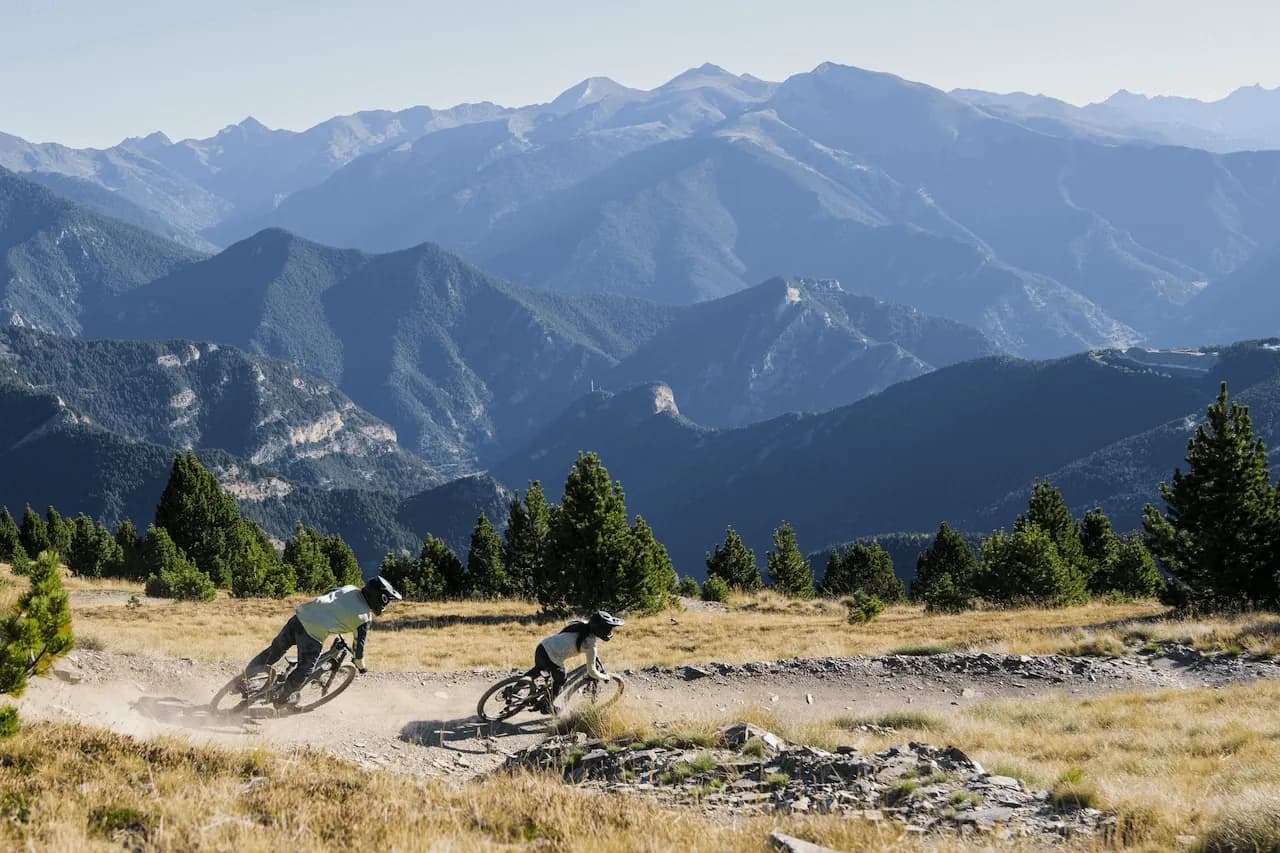
A bike park is a mountain area set up for riding downhill on a bike. Unlike a regular mountain route, you do not have to pedal uphill: the lift (gondola or chairlift) takes you up with your bike, and all the effort goes into the descent. The trails are built and maintained on purpose: they have berms, jumps, sections of roots and rock, and they are closed or inspected depending on the condition of the terrain.
That is why a bike park lets you do many runs in a single day, something impossible if you had to climb back up on your own every time. It is also why it is a sport with risk: you ride at speed and there are jumps, so protective gear and caution matter.
How a day at the bike park works
- Bike Pass. You buy the Bike Pass for the number of days you will ride. It gives access to the open lifts of the bike park.
- Ride up. You go up on the lift with your bike. On a gondola, bikes hang on external racks; on a chairlift there is a dedicated system to hook it on. The lift staff will help you the first time.
- Choosing a trail. At the top there is a map with all the trails and their level. You choose according to your experience.
- Ride down. Ride following the signs and respecting right of way. At the end of the descent you return to the lift.
- Breaks. It is normal to stop between runs to rest your hands and forearms, drink and check your bike.
Each resort publishes its map, its opening hours and the trails open each day. Check the official website before you go, because opening depends on the weather and the condition of the trails.
Difficulty levels: green, blue, red and black
Trails are classified by colour, like ski slopes:
| Colour | Who it is for | What to expect |
|---|---|---|
| Green | First time or getting your feel back | Wide trails, gentle slope, little technical difficulty |
| Blue | You already control the bike on descents | Berms, small jumps and linked corners |
| Red | Bike park experience | More speed, roots, rock and bigger jumps |
| Black | Riders with a lot of technique | Demanding terrain, big jumps and very technical sections |
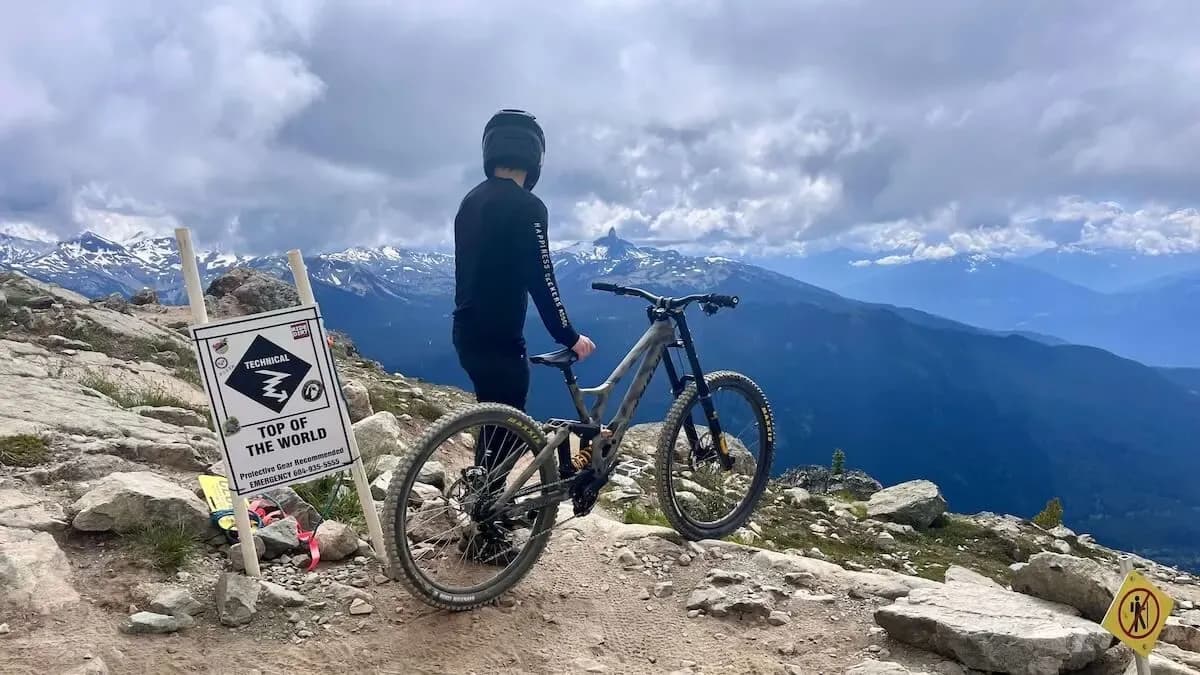
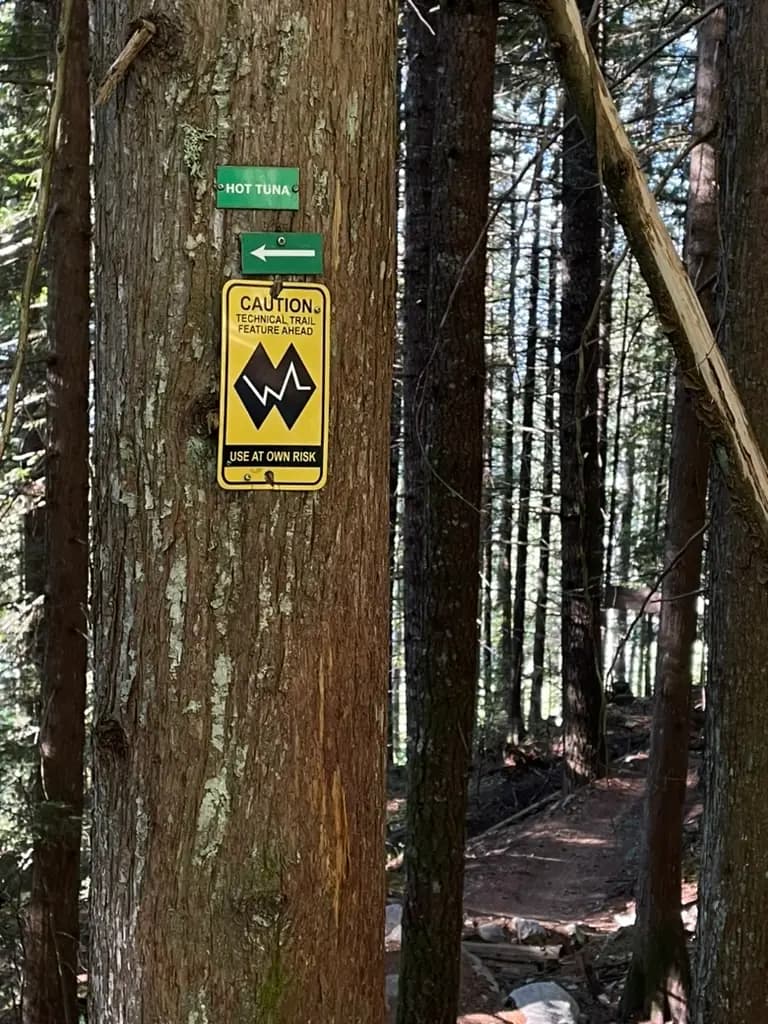
In North America, the signage is different: Green, Blue, Black (one black diamond), Double Black (two black diamonds) and Pro Line.
The classification does not always go hand in hand with the difficulty of the obstacles on the trail: exposure to the terrain or lines with a high consequence in case of a fall also define the difficulty assigned, as do distance and altitude.
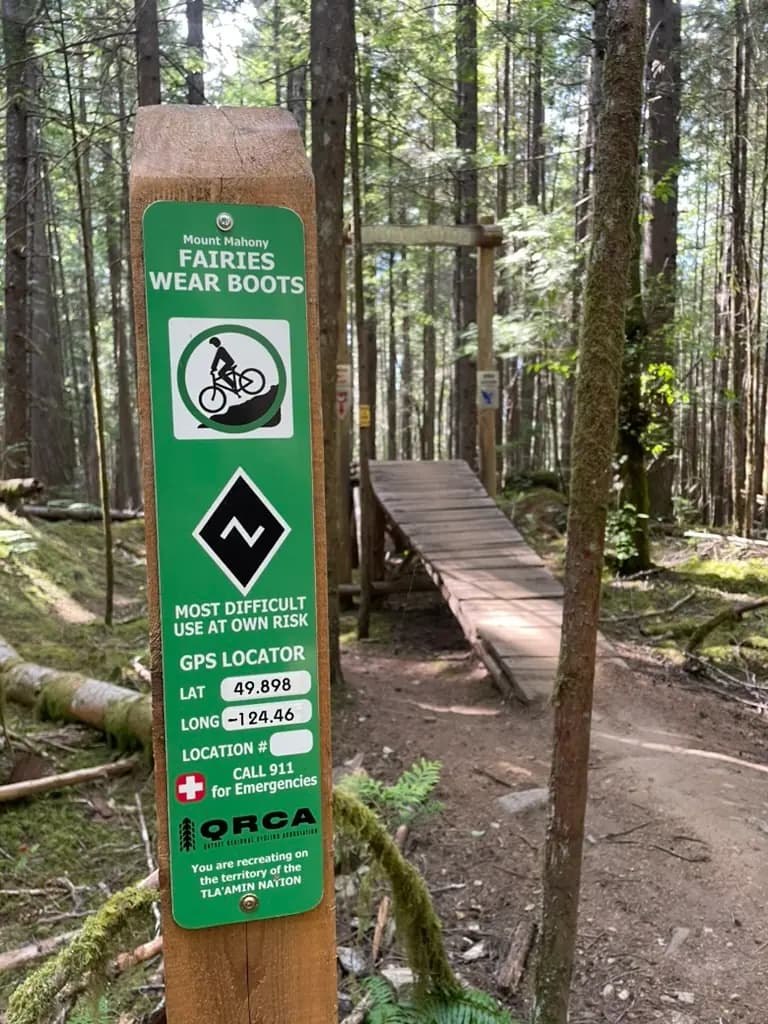
The practical rule for the first day: start one level below the one you think you have. A blue bike park trail can be faster and more technical than any path you have ridden before. Every bike park has its own scale and not all blues are the same, so move up a level gradually as you get to know the terrain.
A real example: Vallnord Pal Arinsal Bike Park
To see how all this works in practice, take the Vallnord Pal Arinsal Bike Park, in La Massana (Andorra). According to the official 2026 season data we work with:
- 30 trails and more than 60 km, with more than 1,000 m of vertical drop.
- 4 lifts: 1 gondola and 3 chairlifts.
- Levels: 5 green trails, 10 blue, 11 red and 6 black, plus beginner areas and e-bike trails.
- Disciplines: downhill, enduro, cross-country and e-bike.
- Downhill school with qualified instructors and an area for children aged 3 to 10.
It is a good example because it brings together everything that defines a bike park: lifts, trails for every level, a school and services. You can see its details on the Vallnord Pal Arinsal Bike Park page.
What you need for your first time
- Bike: a full-suspension mountain bike, with the brakes and suspension checked. If you do not have a downhill bike, you can rent one in the area.
- Protection: full-face helmet, goggles, gloves and knee pads as a minimum. Many riders add elbow pads and back protection.
- Clothing: long sleeves and light long trousers protect you from scrapes if you fall; the temperature at altitude changes quickly, so bring a layer.
- Bike Pass and insurance: check what your insurance covers. Many bicycle insurance policies do not cover downhill, and it is worth asking in writing whether it covers bike park riding.
We detail the gear piece by piece in the bike park gear checklist.
Bike park, enduro and mountain trail: how they differ
- Mountain trail (XC or trail): you pedal up and down, with no lifts. Light bike and less protection.
- Enduro: you pedal to the top and race or enjoy technical descents. In a bike park you can ride enduro with the help of the lifts.
- Bike park (downhill): you go up on the lift and all the effort goes into going down. A bike with more suspension travel and full protection.
If you want to try guided enduro in Spain, take a look at the enduro trip to Sierra de Guara.
How to start without fear
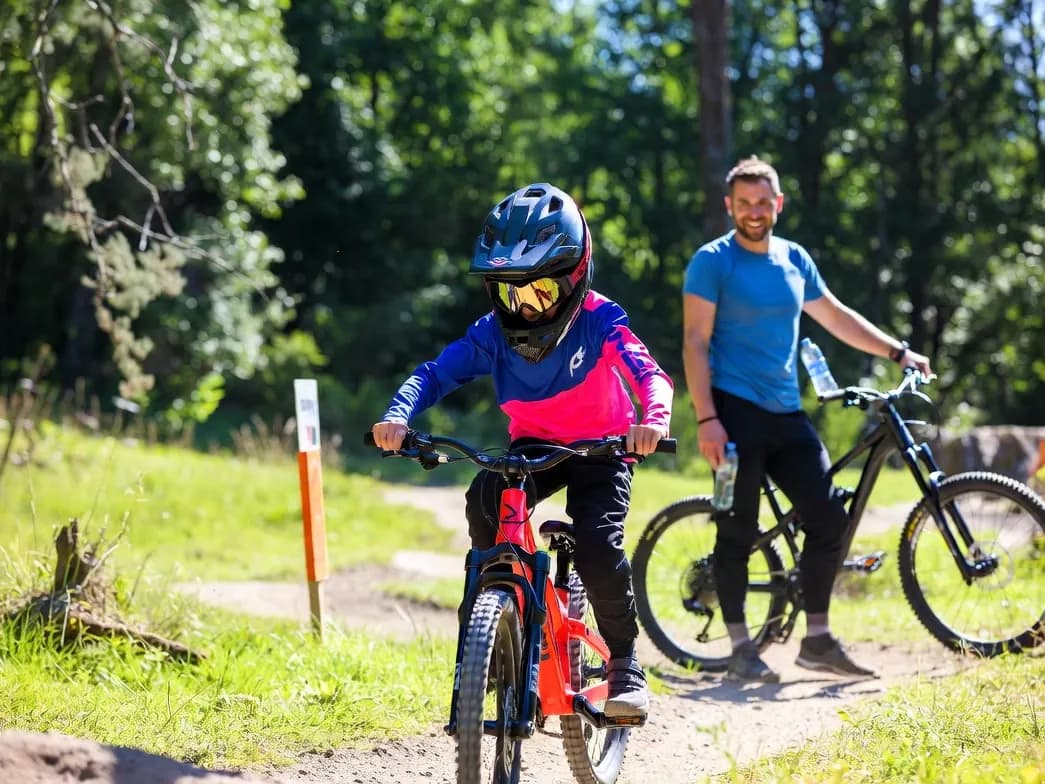
- Take a lesson. A session with an instructor teaches body position, braking and where to look, and greatly reduces the scares of the first day. Many bike parks have a school.
- Warm up on a beginner area or a green trail. That way you get used to the bike and the speed.
- Ride at your own pace. Do not get carried away by whoever is ahead. Stop in a safe place, never in the middle of a jump or a blind corner.
- Check the weather. Rain and fog change the grip and the visibility. If in doubt, drop a level or rest.
- Stop when you are tired. With exhausted hands and concentration, mistakes come more easily: one last run too many is not worth it.
To see where the bike parks are and compare destinations, use the bike park map.
Frequently asked questions
What is a bike park?
It is a mountain resort with lifts and downhill bike trails classified by level. You ride up on the lift with your bike and ride down the trail you choose, as many times as you like while the lifts are open.
Do I need a special bike to go to a bike park?
The ideal is a full-suspension mountain bike with checked brakes. If you do not have a downhill bike, you can rent one near the bike park. Some areas, such as Grandvalira E-Bike Trails, are only for electric mountain bikes.
Can I go to a bike park if I am a beginner?
Yes. Bike parks have green trails, beginner areas and schools. Pal Arinsal, for example, has areas for beginners, a downhill school and a space for children aged 3 to 10. Start one level below the one you think you have.
What protection is necessary?
As a minimum, a full-face helmet, goggles, gloves and knee pads. In some bike parks the full-face helmet is mandatory on certain trails or areas, such as on the Grandvalira E-Bike Trails routes. Always check the resort's rules.
How many days of bike park do I need?
It depends on your experience and your fitness. For a first trip, two or three days let you adapt without piling up fatigue. Hands and forearms are usually the first thing to suffer.
When do bike parks open?
They are seasonal and open in summer. Pal Arinsal opened in 2026 from 20 June to 13 September every day, and then at weekends until 12 October. The 2027 dates have not been published yet.