Guides
What to take to a Bike Park: the complete kit checklist
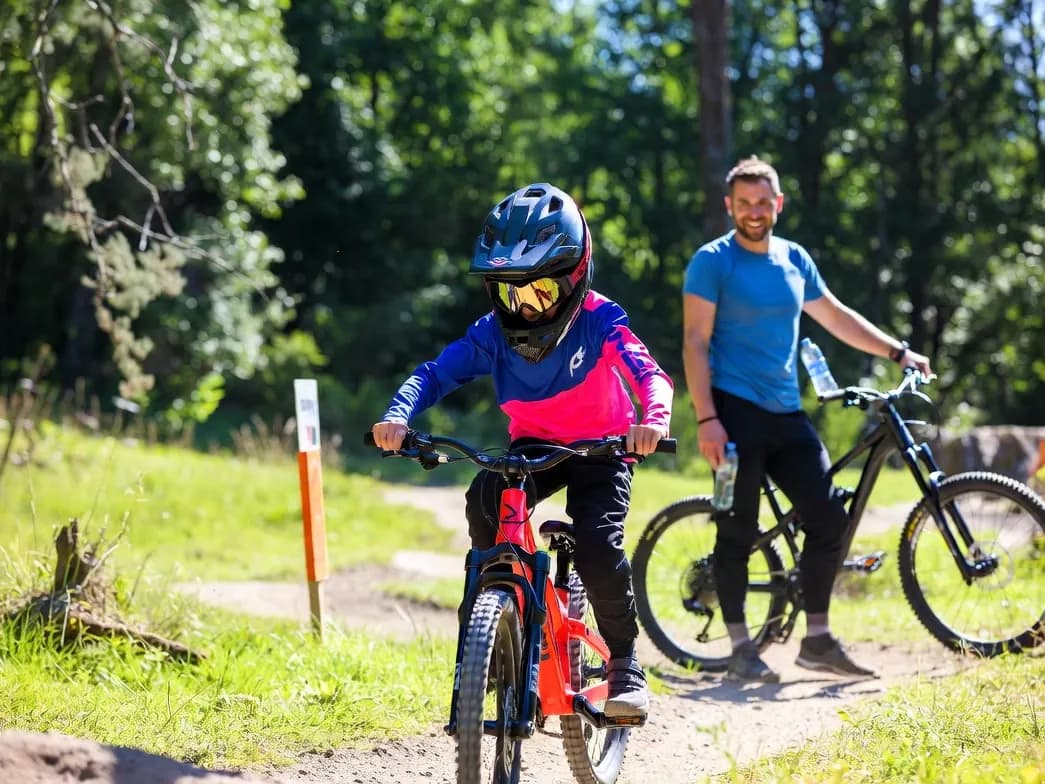
Quick answer: to ride a bike park you need, at the very least, a full-face helmet, glasses or goggles, gloves, knee and elbow pads, a serviced full-suspension bike with two brakes in perfect working order, a basic repair kit (multi-tool, pump or CO₂, inner tube, quick link) and a change of clothes. The extras that make a real difference are a back or chest protector, a hydration pack, spare brake pads and accident insurance. And before you leave home, check the rules of the specific park: what's compulsory varies from place to place.
Packing for your first day at a bike park (or your tenth) is what separates a day of laps from a day spent in town hunting for a bolt. This practical guide from BikePark Holidays covers what to take to a bike park, why each item matters and what you can hire at the park itself so you don't overpack.
Quick checklist (printable)
| Category | Essential | Recommended |
|---|---|---|
| Head and face | Full-face helmet, glasses or goggles | Spare helmet or spare goggles (clear lenses) |
| Body | Gloves, knee pads, elbow pads | Back/chest protector, padded shorts with hip protection, neck brace |
| Bike | Working front and rear brakes, tyres with good tread, suspension set up | Spare brake pads, suspension/cleaning fluid |
| Repairs | Multi-tool, pump or CO₂, inner tube, tyre levers, quick link | Spare derailleur hanger, zip ties, duct tape |
| Clothing | Technical jersey, tough trousers, long socks, shoes with good soles | Dry spare jersey and socks, lightweight rain jacket |
| Personal | Water, phone with the park's emergency number | Hydration pack, basic first-aid kit, sun cream, snack |
| Documents | Ticket/Bike Pass, ID card, insurance that covers downhill | European Health Insurance Card, emergency contact |
Protection: non-negotiable
Protective gear is the part of your bag where you shouldn't cut corners or improvise. At a bike park you ride faster, jump more and crash harder than on a mountain trail.
Full-face helmet: why, and which certification to look for
Many parks require, or strongly recommend, a full-face helmet. Mottolino bike park, for example, makes it compulsory because it offers the best protection in a crash, and The Gap also asks for it to be in good condition and properly fitted.
As for certification standards:
- EN 1078 is the general European standard for bike helmets (road, XC, trail). It's the legal minimum for sale in Europe, but it isn't designed for high-speed downhill impacts.
- ASTM F1952 is the US standard specifically for downhill helmets. It tests the helmet against more severe impacts and covers more of the head.
Practical tip: for bike park riding, look for a full-face that lists ASTM F1952 on its spec sheet. Standards are revised periodically, so check the manufacturer's website to confirm which version your model meets.
More detail in the ASTM F1952 standard.
Glasses or goggles
Dirt, grit and dust kicked up by the front wheel hit your eyes at speed. Goggles that seal off your field of vision well (or full-coverage protective glasses) save you some scares. Take clear lenses for woodland or shade and tinted ones if the track is open.
Knee and elbow pads
Knees are usually the first point of impact in a crash, and some parks make knee pads compulsory along with a helmet. For example, the rules at IrriSarri Land (Navarre) require them, and recommend elbow pads, a chest protector and goggles.
- Knee pads: choose a pair that stays put when you pedal and doesn't restrict bending. Soft foam pads are comfortable for everyday use; hard-shell ones are for technical tracks and big jumps.
- Elbow pads: light and ventilated is best; you'll be wearing them all day.
Gloves
They protect your hands in crashes and from blisters after lots of runs. Take two pairs: a spare, because sweat or rain makes your grip worse.
Back or chest protector
Optional on easy trails, highly recommended on red/black trails, jump lines and rocky bike parks. There are vest-style models and ones built into a jersey.
If you've already picked your destination, our FAQ explains which kit is compulsory and which is recommended.
The bike: what to check before you get on the chairlift
A classic hardtail mountain bike or an XC bike isn't suitable for many bike park trails. Ideally you want a full-suspension bike (enduro, aggressive all-mountain, freeride or downhill) with long travel — around 160–200 mm — and quality hydraulic disc brakes.
10-point check (do this before every riding day)
- Brakes: two working brakes (compulsory) and pads with plenty of material left.
- Tyres: tread in good condition and pressure suited to your weight and the terrain.
- Rims and spokes: no dents, no loose spokes.
- Handlebar and stem: tightened to the manufacturer's torque.
- Saddle and dropper post: secure, no play, remote working.
- Suspension: pressure and sag set for your weight.
- Axles and hubs: tight, no play.
- Chain and gears: lubed, no skipping; derailleur hanger straight.
- Frame: no cracks or suspicious dents.
- Wheel fastenings: properly fitted.
If you're not confident with suspension, ask the park staff or the bike park shop to set your sag for your weight and explain the compression and rebound controls before your first run.
Tools and spares: your everyday kit
Lift-served parks usually have a workshop or mechanic near the base, but a puncture halfway down a trail won't wait. This is the minimum kit, small enough for a shorts pocket or your pack:
- A bike-specific multi-tool (with Allen and Torx keys and a chain breaker).
- Hand pump or CO₂ cartridge.
- Spare inner tube (even if you run tubeless, it's your insurance for a bad day) and a patch kit or tubeless plugs.
- Tyre levers.
- Quick link and a few chain links.
- Zip ties and duct tape: they fix more than you'd think.
For a stay of several days
- Spare brake pads: they wear out much faster at a bike park than on the trail.
- Derailleur hanger specific to your bike: a cheap part, hard to find and the one most likely to get bent.
- Gear or brake cable, chain lube and a rag.
- Brake fluid or a bleed kit if you know how to use it.
Travelling with your own bike? BikePark Holidays' bike-friendly accommodation includes a locked or CCTV-monitored bike room, a wash area and basic repair support (check the details for each property in the FAQ).
Clothing, footwear and pack
Layer up
- Breathable technical jersey, ideally long-sleeved if you tend to crash or there's undergrowth.
- Tough trousers (or padded liner shorts if you wear shorts with protection).
- Long socks, so your knee pads don't rub.
- Lightweight rain jacket that packs small: mountain weather changes fast.
Footwear
Shoes with grippy rubber soles (flat pedals) are the norm at bike parks. With a stiff, sticky sole, your foot stays put on rough sections.
Spare clothes
A dry jersey and socks for after riding stop you ending up cold and soaked when the session's over. It seems like a small thing, but you really notice it on long days.
Pack
A small hydration pack (2–6 litres) for water, tools, a snack and a basic first-aid kit. On really rough trails, some riders prefer a lightweight hip pack so as not to overload their back.
Documents, insurance and logistics
- Ticket or Bike Pass (if you buy it online, have the code on your phone).
- ID card or passport and, if you're from the EU, your European Health Insurance Card.
- Accident insurance that covers downhill/bike park riding. Some parks make it compulsory. Check that your cycling federation membership or travel insurance includes this activity: many policies exclude it.
- Charged phone with the park's emergency number saved. In an accident, that's the first number you should call.
- Basic first-aid kit: plasters, gauze, saline, tape, antiseptic, foil blanket.
- Plan for the day: check the trail map and the level of each trail (green, blue, red, black) and start on the easiest ones to warm up.
What to hire and what to bring yourself
Not everything has to go in your bag. Many bike parks hire out or sell full-face helmets, goggles, knee pads, elbow pads, gloves and body armour, and some include part of the kit in the price of the Bike Pass; they also hire out downhill bikes. Confirm availability and sizes before you go.
| Item | Bring your own? | Hire it? |
|---|---|---|
| Full-face helmet | Yes, ideally (fit and hygiene) | Possible, but check its condition and size |
| Gloves | Yes | Buy some at the park if you forget them |
| Knee / elbow pads | Yes, if you'll be riding often | Yes, a practical option on your first visit |
| Back protector | Depending on use | Commonly available to hire |
| Downhill bike | If you have a suitable one | Yes, if you're flying or don't have a long-travel bike |
| Tool kit | Yes, always | — |
Where to put this checklist to use: three bike parks with accommodation and Bike Pass
- Vallnord Pal-Arinsal (Andorra): full-face helmets and protective gear are compulsory in skills lessons, so bring your full kit or confirm hire before you arrive. See Vallnord and book.
- Grandvalira (Andorra): same conditions in lessons (full-face helmet and protective gear compulsory). Ideal to combine with an e-bike. See Grandvalira.
- Manzaneda (Ourense): protective gear is highly recommended and sometimes compulsory: full-face helmet, knee pads, gloves and back or chest protection. The accommodation is right next to the bike park. See Manzaneda.
With BikePark Holidays you can add extras to your booking such as bike hire, protective gear and insurance, and stay at bike-friendly places with a locked bike room. Check the details of each deal in Deals.
Common packing mistakes
- Turning up with an open-face trail helmet at a park that requires a full-face.
- Forgetting to check your brakes and finding out on the first run that the pads are worn down.
- Not checking your insurance: a crash at a bike park can end in a huge bill if your policy excludes the activity.
- Not bringing a change of clothes and freezing on the chairlift.
- Carrying too much weight in your pack. Stick to the essentials and leave the rest in the car.
- Not reading the park rules. Every place has its own: compulsory protection, minimum age, opening hours, weather closures.
Frequently asked questions
What is compulsory to bring to a bike park?
It depends on the park, but the usual requirement is a helmet (often a full-face) and a bike with working brakes. Some also make knee pads compulsory, and almost all recommend gloves, goggles, elbow pads and a back protector. Check the park's rules before you go.
Do you need a full-face helmet at a bike park?
At most parks it's highly recommended and at quite a few it's compulsory. It protects your chin and face, which an open-face helmet leaves exposed. For bike park riding, look for one with downhill certification (ASTM F1952) as well as EN 1078.
Can I ride a bike park on a normal mountain bike?
It isn't advisable on an XC bike or a hardtail, because they aren't designed for jumps, berms and rough terrain. The recommendation is a long-travel full-suspension bike with hydraulic disc brakes, or hiring one at the park itself.
What tools should I take to a bike park?
A multi-tool, pump or CO₂, spare inner tube, tyre levers, quick link and zip ties. If you're staying several days, add brake pads and a derailleur hanger for your model.
What clothes should I wear at a bike park?
A technical jersey, tough trousers, long socks, shoes with good soles, gloves and a lightweight rain jacket. Bring dry spare clothes for after riding.
Do I need insurance to ride a bike park?
Some parks require it, and even if they don't, it's highly advisable. Check that your policy (cycling federation, travel or accident insurance) expressly covers downhill or bike park riding.
What can I hire at a bike park?
Usually downhill bikes, full-face helmets, goggles, protective gear and body armour. Book ahead in high season and confirm sizes.
Conclusion
Getting your bike park packing right comes down to three things: full protection, a serviced bike and a repair kit. If you're unsure whether to take something, think about what it costs to forget it: a spare pair of gloves weighs next to nothing; a crash without knee pads or a day lost to a bent hanger costs a lot more.
Print out the table above, tick off what you already have and fill in the gaps. And if you're planning your first visit, start on the green and blue trails, step up gradually and enjoy the park.
Ready for your next trip? Book accommodation + Bike Pass in Vallnord, Grandvalira or Manzaneda, explore every park on the map or take the Rider Quiz to find out which destination suits your level.
Sources consulted: rules and recommendations from the bike parks at Mottolino, The Gap and IrriSarri Land; kit guides from Howler Bike Park and evo; helmet standards ASTM F1952.